 By Miles Sinclair
Updated November 2026
Choosing sprint workouts for middle school track is harder than it looks. Young athletes are still growing, practice time is limited, and coaches often need a plan that works for a whole squad rather than one runner. We compared three sprint-focused resources based on what they cover, who they are written for, and how easily a middle school coach or athlete can put them to work.
Selection criteria: age-appropriate focus, clear progressions, coverage of sprint mechanics and race-day speed, and practicality for small programs.
Our top picks at a glance
- 1
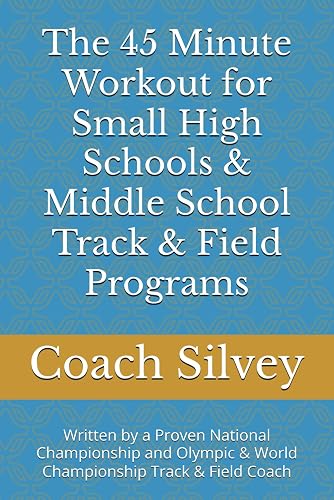 TOP CHOICEBest overallThe 45 Minute Workout for Small High Schools & Middle School Track & FView on Amazon
- 2
 Best for mental focus before sprintsMind Sprint: Quick Workouts For a Faster, Focused BrainView on Amazon
- 3
 Best for drill-based speed developmentTRACK SPRINTS DRILLS & SKILLS: A Complete Training Guide for Speed, PoView on Amazon
Our Top Picks
Quick Comparison
| Product | Best for | Key feature |
|---|---|---|
| The 45 Minute Workout for Small High Schools & Middle School Track & Field Programs | Small programs needing a full session plan | Single-session structure |
| Mind Sprint: Quick Workouts For a Faster, Focused Brain | Warm-ups and focus drills | Short, focused sessions |
| TRACK SPRINTS DRILLS & SKILLS | Technique-driven speed work | Drill and skill breakdowns |
The 45 Minute Workout for Small High Schools & Middle School Track & Field Programs
The 45 Minute Workout for Small High Schools & Middle School Track & Field Programs: Written by a Proven National Championship and Olympic & World Championship Track & Field Coach
Best for: Coaches running a complete sprint session within a fixed practice window. A related read: Top 4 Jumping Workouts for Track: Our Picks Compared.
This book is aimed at coaches of small teams who need a ready-to-run session rather than a long training manual. It is written by a coach with national championship and Olympic-level credentials, which gives the workouts a competitive grounding. Does Fitbit Inspire Track Workouts? 3 Best Models Compared (2026) goes further into this.
Pros
- Sessions are built to fit a 45-minute window.
- Suited to programs with limited staff and space.
Cons
- Less detail on long-term periodization.
Mind Sprint: Quick Workouts For a Faster, Focused Brain
Mind Sprint: Quick Workouts For a Faster, Focused Brain
Best for: Athletes who lose focus during repeat sprints and need mental preparation.
This title leans toward mental readiness rather than physical sprint technique. It suits coaches who want short routines that sharpen attention before a sprint block or a meet.
Pros
- Short routines that fit easily into warm-ups.
- Useful for teaching focus to younger athletes.
Cons
- Not a complete sprint programming resource.
TRACK SPRINTS DRILLS & SKILLS: A Complete Training Guide for Speed, Power, Acceleration & Race-Day Excellence
TRACK SPRINTS DRILLS & SKILLS: A Complete Training Guide for Speed, Power, Acceleration & Race-Day Excellence (SPORTS Drills & Skills)
Best for: Coaches who want to build sprint mechanics through structured drills.
This guide focuses on the technical side of sprinting, including acceleration, power, and race-day execution. It works well for coaches teaching form to athletes who are new to starts and drive phases.
Pros
- Clear drill breakdowns for acceleration and form.
- Covers race-day execution alongside training.
Cons
- Drills may need adapting for younger age groups.
Buying Guide
Match the session length to your practice window
Middle school practices are often 45 to 60 minutes, and a plan that needs more time will get cut. Look for sessions that state their total duration and that let you drop or repeat a block.
Check for age-appropriate sprint volume
Younger athletes benefit from shorter sprint distances and full recovery between reps. Favor resources that explain rest intervals rather than prescribing only maximal efforts.
Look for technique coverage, not just workouts
Good sprint training teaches posture, arm drive, and acceleration mechanics. A resource that breaks these down will help coaches correct form, not just count reps.
Prioritize mental preparation if your team struggles with focus
Some athletes lose intensity during repeat work. Short focus routines can help, though they work best alongside physical training rather than replacing it.
Good picks for this: The 45 Minute Workout for Small High Schools & Middle School Track & Field Programs, TRACK SPRINTS DRILLS & SKILLS
FAQ
How many sprint sessions per week suit middle schoolers?
Most youth programs use one to two dedicated sprint sessions per week, with easy running or rest on other days. Check with your school’s athletic staff or a pediatric or sports medicine professional before setting a training load.
How long should a middle school sprint interval be?
Many coaches use short sprint distances of about 30 to 60 meters with full or near-full recovery. Adjust based on the athlete’s age, experience, and how well they maintain form.
Do sprint drills replace full-speed sprints?
Drills build technique but do not fully replace running at speed. Most programs combine both, using drills to teach form and sprints to build speed.
Conclusion
For a small program that needs a complete session plan, the 45-minute workout book is the most practical starting point. Coaches who want to strengthen focus should consider the mental-readiness title, while those teaching technique will get the most from the drill-based guide.
Sources
- Physical activity guidelines for children and adolescents, including recommended activity levels for youth (cdc.gov)
- Research summaries on youth exercise, growth, and recovery (nih.gov)
Related reading
- Top 4 Explosive Workouts for Track: Our Picks Compared
- Top 4 Apps to Track Workouts and Weights: Our Picks Compared
- Interval Training Track Workouts: 6 Sessions for Faster 400m and 800m Splits
- Does Oura Ring Track Workouts Well? What It Does and Doesn't Capture
- Does MyFitnessPal Track Workouts? How to Log Runs and Intervals (2026)
- Best App to Track Workouts Reddit Users Recommend: 6 Picks Compared
About Miles Sinclair
Miles Sinclair is part of our editorial team and reviews and edits our speed & interval running guides, checking product details against manufacturer specifications and owner feedback.