 By Miles Sinclair
Updated November 2026
Track and field workouts for youth work best when the session fits the age group, the event mix and the coach’s time. This list covers four books and logbook-style resources that youth coaches commonly use to plan sessions. Selection criteria: how directly the resource addresses youth or middle school programs, how clearly it lays out sample sessions, and how well it supports season-long planning. Product details below come from listing descriptions and common owner feedback patterns, not hands-on testing.
Our top picks at a glance
- 1
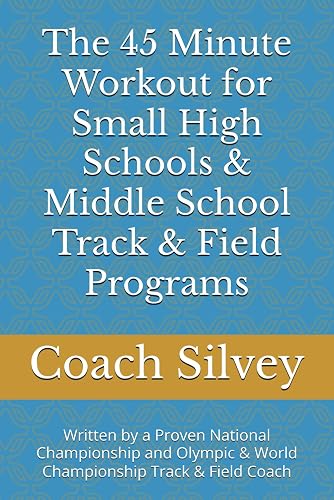 TOP CHOICEBest overallThe 45 Minute Workout for Small High Schools & Middle School Track & FView on Amazon
- 2
 Best for season planningTrack & Field Coach Workout & Meet LogbookView on Amazon
- 3
 Best for event-specific drillsTrack & Field Championship Workouts Made SimpleView on Amazon
- 4
 Best for new coachesCoaching Middle School Cross Country and Track & FieldView on Amazon
Our Top Picks
| Product | Best for | Key feature |
|---|---|---|
| The 45 Minute Workout for Small High Schools & Middle School Track & Field Programs | Small programs with limited time | Compact 45-minute session plans |
| Track & Field Coach Workout & Meet Logbook | Organizing a full season | 110 pages for workouts and results |
| Track & Field Championship Workouts Made Simple | Event-specific training ideas | Workouts across sprints, jumps and throws |
| Coaching Middle School Cross Country and Track & Field | First-year coaches | Sample workouts and coaching basics |
The 45 Minute Workout for Small High Schools & Middle School Track & Field Programs
The 45 Minute Workout for Small High Schools & Middle School Track & Field Programs: Written by a Proven National Championship and Olympic & World Championship Track & Field Coach
Best for: Small programs that need efficient, time-boxed practices.
This book suits coaches who share facilities or have a limited practice window and want structured sessions that fit inside 45 minutes. It is written by a coach with national championship and international team experience, which listing copy highlights as the basis for its workouts.
Pros
- Sessions are built around a fixed time block.
- Suited to mixed-event groups.
Cons
- Less detail on long-term periodization.
Track & Field Coach Workout & Meet Logbook
Track & Field Coach Workout & Meet Logbook : A Complete Season Planner for Sprints, Distance, Jumps, Throws, Conditioning, and Track Meet Results — 8.5×11, 110 Pages
Best for: Coaches who want to track workouts, athlete progress and meet results in one place.
This logbook-style planner is aimed at coaches who prefer writing down sessions and results across a season rather than working from a textbook. Its large page format leaves room for notes on sprints, distance, jumps, throws and conditioning.
Pros
- Space for workouts, meet results and athlete notes.
- Covers all event groups in one planner.
Cons
- Contains no pre-written workouts, so coaches must supply their own content.
Track & Field Championship Workouts Made Simple
Track & Field Championship Workouts Made Simple: A Book written by a proven National Championship & Olympic Track & Field Coach
Best for: Coaches looking for event-specific workout ideas they can adapt for young athletes.
This book collects workout concepts from an experienced national and Olympic-level coach. It works best for coaches who already understand basic training and want practical session ideas to adjust for youth athletes.
Pros
- Clear, event-by-event workout ideas.
- Concise and easy to scan before practice.
Cons
- Written with competitive athletes in mind, so younger groups need scaling.
Coaching Middle School Cross Country and Track & Field
Coaching Middle School Cross Country and Track & Field: Practical Guidance and Sample Workouts for Beginner Coaches
Best for: First-time coaches working with middle school athletes.
This guide targets coaches new to middle school programs and pairs general coaching guidance with sample workouts. It is a good starting point for anyone building a practice plan from scratch.
Pros
- Written specifically for middle school age groups.
- Covers both cross country and track.
Cons
- Sample workouts are general, so experienced coaches may want more depth.
Buying Guide
Match the age group and training load
Youth athletes need shorter sets, more recovery and more variety than adults. Look for resources that address age-appropriate volume and mention scaling down intervals or reps.
Check event coverage
Youth programs often have athletes rotating across sprints, jumps and throws. A resource covering several event groups saves time when planning mixed practices.
Consider how you plan
Some coaches prefer a printed logbook to record sessions and results, while others want ready-made workouts. Decide which format matches your workflow before buying.
Prioritize safety and progression
Workouts should build gradually, with warm-ups and recovery built in. Check whether the book discusses progression, and consult a qualified youth sports medicine professional or your school’s athletic trainer before starting new high-intensity sessions with children.
Good picks for this: The 45 Minute Workout for Small High Schools & Middle School Track & Field Programs, Coaching Middle School Cross Country and Track & Field
FAQ
Are these workouts suitable for all youth ages?
Most of these resources are written with competitive or middle school athletes in mind, so coaches should scale volume and intensity for younger children. Always adapt sessions to each athlete’s maturity and experience.
Do I need a logbook if I already have a workout book?
Not always, but a logbook helps you track progress across a season and spot patterns in athlete performance. Many coaches use both a planning book and a logbook together.
How often should youth athletes do speed or interval work?
Most youth programs limit high-intensity track sessions to a few times per week with rest days between. Check with your school or a qualified youth coach for guidance matched to your athletes.
Conclusion
For small programs with limited time, the 45-minute session book is the most direct fit. Coaches who want to organize a full season should consider the logbook, while first-time middle school coaches will get the most from the cross country and track guide. Event-focused coaches can use the championship workout book for additional ideas.
Related reading
- Track and Field Strength and Conditioning Workouts: 4 Best Picks for 2026
- Track and Field Core Workouts: 3 Best Picks for Speed and Power
- College Track and Field Workouts PDF: A Printable Training Guide
- 3 Best Circuit Training Workouts for Track and Field Athletes (2026)
About Miles Sinclair
Miles Sinclair is part of our editorial team and reviews and edits our speed & interval running guides, checking product details against manufacturer specifications and owner feedback.