
 By Owen Palmer
Updated November 2026
If you want the fitness benefits of intense intervals without the pounding that comes with sprinting or jumping, low impact interval training is the approach to look at. Many readers come to this topic after a joint flare-up, a return from injury, or simply a desire to keep the intensity high without hard landings. Choosing a good reference matters, because the best books in this area explain how to scale effort, structure rounds, and avoid the common mistake of turning every session into a high-impact sprint. The five picks below were selected by comparing published descriptions, author backgrounds, the scope of each book’s programming, and the patterns owners frequently mention in their feedback. Nothing here reflects personal testing, and each book’s guidance should be adapted to your own health status.
Our top picks at a glance
- 1
 TOP CHOICEBest overallHIIT – High Intensity Interval Training ExplainedView on Amazon
- 2
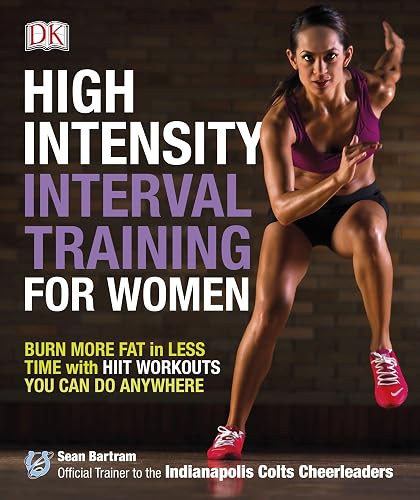 TOP CHOICEBest for beginnersHigh-Intensity Interval Training for Women: Burn More Fat in Less TimeView on Amazon
- 3
 TOP CHOICEBest for workout varietyUltimate Guide to HIIT: High-Intensity Interval TrainingView on Amazon
- 4
 Best for programming theoryScience and Application of High Intensity Interval Training: SolutionsView on Amazon
- 5
 Best for older adultsStaying Young with Interval Training: The Revolutionary HIIT ApproachView on Amazon
Our Top Picks
Quick Comparison
| Product | Best for | Key feature |
|---|---|---|
| HIIT – High Intensity Interval Training Explained | Readers wanting a clear foundation | Plain-language explanation of interval principles |
| High-Intensity Interval Training for Women | Beginners who want home-friendly routines | Bodyweight-focused sessions |
| Ultimate Guide to HIIT | Readers who want variety | Broad library of interval formats |
| Science and Application of High Intensity Interval Training | Coaches and advanced self-coaches | Evidence-oriented programming logic |
| Staying Young with Interval Training | Adults over 40 and returning exercisers | Age-aware intensity guidance |
HIIT – High Intensity Interval Training Explained
HIIT – High Intensity Interval Training Explained
Best for: A clear, foundational explanation of how interval structure drives results
This book suits readers who want to understand the reasoning behind intervals before following any plan. It is a good starting point if you have never organized a session by work and rest periods, because it explains how to set effort levels and recovery windows so you can keep impact low while the heart rate still climbs.
Key specs
- Format: paperback guide (confirm current edition on the listing)
- Focus: general interval principles and training structure
- Audience: general fitness readers
Pros
- Explains the why behind work-to-rest ratios
- Useful for adapting any routine to lower impact
- Accessible language for non-coaches
Cons
- Less detailed on specific low-impact exercise swaps
- Readers wanting a ready-made weekly schedule may need a second resource
Bottom line: Best for readers who want to build understanding first and then design their own low-impact sessions.
High-Intensity Interval Training for Women: Burn More Fat in Less Time with HIIT Workouts You Can Do Anywhere
High-Intensity Interval Training for Women: Burn More Fat in Less Time with HIIT Workouts You Can Do Anywhere
Best for: Beginners who want home-friendly, minimal-equipment routines
The title signals a focus on portable, bodyweight-style sessions, which is a natural fit for low impact work. Owners frequently describe it as approachable for people returning to exercise, though it is worth checking the current table of contents to confirm which movements are included and how they are graded.
Key specs
- Format: paperback workout guide
- Focus: anywhere-friendly interval routines
- Audience: beginners and intermediate exercisers
Pros
- Workouts require little or no equipment
- Easy to follow for newer exercisers
- Useful template for building your own short sessions
Cons
- Some movements may still be high impact and need modifying
- Advanced athletes may find the progressions too basic
Bottom line: A practical pick for beginners who want simple, at-home sessions they can start this week. You may also like Interval Training for Triathlon: 5 Best Books and Logs Compared (2026).
Ultimate Guide to HIIT: High-Intensity Interval Training
Ultimate Guide to HIIT: High-Intensity Interval Training
Best for: Readers who want a wide range of interval formats to rotate through
Guides with this broad scope tend to suit people who get bored with one workout pattern. Because the emphasis is on variety, you can pull lower-impact options from the wider menu and combine them, provided you check each movement for joint stress before adding it to your routine.
Key specs
- Format: paperback guide
- Focus: multiple interval formats and workout examples
- Audience: general adult exercisers
Pros
- Good range of workout structures
- Helpful for mixing intervals across the week
- Useful reference to return to
Cons
- Not every routine is explicitly labeled low impact
- Requires some judgment to modify movements
Bottom line: Ideal for readers who want variety and are comfortable adapting exercises themselves.
Science and Application of High Intensity Interval Training: Solutions to the Programming Puzzle
Science and Application of High Intensity Interval Training: Solutions to the Programming Puzzle
Best for: Coaches and advanced self-coaches who want the programming logic behind intervals
This title is oriented toward the underlying science and how to program intervals over time. It is less about specific low-impact moves and more about the variables you control, such as intensity, duration, and recovery, which you can then apply to lower-impact modalities like cycling, rowing, or walking intervals.
Key specs
- Format: technical, programming-focused book
- Focus: interval programming principles
- Audience: coaches, trainers, and experienced exercisers
Pros
- Strong on programming logic and periodization ideas
- Transferable to any low-impact modality
- Useful for troubleshooting stalled progress
Cons
- Denser reading than beginner-oriented titles
- Limited ready-to-use workouts for newcomers
Bottom line: Worth it for readers who want to design their own intervals, but it is not a starter book.
Staying Young with Interval Training: The Revolutionary HIIT Approach to Being Fit, Strong and Healthy at Any Age
Staying Young with Interval Training: The Revolutionary HIIT Approach to Being Fit, Strong and Healthy at Any Age
Best for: Adults over 40 and people returning to exercise after a long break
The age-focused framing makes this a sensible choice for readers whose joints need consideration. Intervals can be scaled down in intensity and impact, and books aimed at older adults typically emphasize gradual progression. Anyone with a medical condition should check with a physician before starting.
Key specs
- Format: paperback guide
- Focus: interval training across adult age ranges
- Audience: middle-aged and older adults
Pros
- Age-aware approach to intensity
- Encourages gradual, sustainable progression
- Relevant for strength and general health goals
Cons
- Less detail for competitive or advanced athletes
- Some readers want more specific exercise demonstrations
Bottom line: A strong fit for adults who want effective intervals while keeping joint stress manageable.
Buying Guide
Clarity of the low-impact approach
Some books mention low impact in passing, while others build their entire program around it. Scan the table of contents and introduction for explicit modifications, such as step-touch substitutes for jumps, seated or standing options, and guidance on keeping both feet partly on the ground. The more concrete the swap instructions, the more usable the book will be for joint-sensitive readers.
Good picks for this: High-Intensity Interval Training for Women; Staying Young with Interval Training
Intended audience and starting level
A book written for coaches will assume you already understand heart rate zones and rest ratios. A beginner book will explain them. Match the reading level to your experience so you do not end up skimming dense theory or, worse, following advanced intervals before your body is ready.
Good picks for this: HIIT – High Intensity Interval Training Explained; Science and Application of High Intensity Interval Training
Structure and programming detail
Look for guidance on work-to-rest ratios, session length, and weekly frequency. A useful low-impact plan typically spells out how long each interval lasts, how hard it should feel on a scale such as 1 to 10, and how many rounds to complete. Vague advice like “go hard” is less helpful than a clear target such as “work at 7 out of 10 for 30 seconds, then recover for 60.”
Good picks for this: Ultimate Guide to HIIT; Science and Application of High Intensity Interval Training
Variety of workout formats
Monotony is one of the most common reasons people stop training. Check whether the book offers different interval formats, such as tabata-style blocks, pyramid sessions, or longer aerobic intervals. Variety also gives you more low-impact options to rotate, which can reduce repetitive stress on the same joints.
Good picks for this: Ultimate Guide to HIIT; High-Intensity Interval Training for Women
Equipment needs
Many interval books assume access to a gym, a bike, or a rower. Bodyweight-based guides are easier to start at home, but make sure they explain how to reduce impact on the knees, ankles, and hips. If you already own a stationary bike or walking space, a book that incorporates those tools may be more useful.
Good picks for this: High-Intensity Interval Training for Women; HIIT – High Intensity Interval Training Explained
Age and recovery considerations
Older readers and those returning from injury need guidance on recovery, rest days, and warning signs. Look for mention of progressive loading and when to stop. The American College of Sports Medicine publishes general exercise guidance that many fitness authors reference, and it is a helpful benchmark when judging whether a book’s recommendations sound reasonable.
Good picks for this: Staying Young with Interval Training; Science and Application of High Intensity Interval Training
Credibility and author background
Check who wrote the book and what qualifications they list. Authors with exercise science, coaching, or clinical backgrounds often provide more reliable guidance on intensity and safety. Be cautious with titles that promise dramatic results in very short timeframes, since these claims are rarely supported by evidence in the way the marketing suggests.
Good picks for this: Science and Application of High Intensity Interval Training; Ultimate Guide to HIIT
FAQ
What exactly is low impact interval training?
It is a method of alternating harder and easier efforts while keeping at least one foot on the ground, avoiding jumps and hard landings. Examples include brisk stepping intervals, cycling sprints, rowing intervals, and step-touch cardio. You still get meaningful effort during the hard intervals, but the force transmitted to the joints is lower than in sprinting or plyometrics.
Can low impact intervals still improve fitness?
Yes, provided the intensity during the work periods is high enough to challenge your cardiovascular system. The effort should feel hard, typically around 7 or 8 out of 10, even though the movement is gentler. Consistency and gradual progression usually matter more than the specific impact level.
How long should a low impact interval session last?
Many beginners start with 15 to 20 minutes, including a warm-up and cool-down. More experienced exercisers may work up to 30 or 40 minutes. Shorter sessions done consistently tend to be more sustainable than long sessions that cause fatigue or soreness.
How often should I do low impact intervals each week?
Two to three sessions per week is a common starting point, with rest or easy movement on the other days. Because intervals are demanding, avoid stacking them on consecutive days until your body adapts. Adjust based on how you feel and how well you recover.
Are low impact intervals safe if I have joint problems?
They are often a better option than high-impact training for people with knee or hip sensitivity, but they are not automatically risk-free. If you have arthritis, a recent injury, heart concerns, or other medical conditions, consult a doctor or physical therapist before starting, and ask whether specific movements should be avoided.
Do I need special equipment?
No. Walking, marching, step-touch movements, and bodyweight exercises require no equipment. A stationary bike, rower, or elliptical can add variety and make intensity easier to control. Choose tools that let you adjust resistance so you can increase effort gradually.
How can I tell if I am working hard enough?
Use a perceived exertion scale. During work intervals you should be breathing hard and find it difficult to speak in full sentences. During recovery intervals your breathing should return close to normal. If you can chat comfortably throughout, increase the intensity or shorten the rest.
Conclusion
Low impact interval training lets you keep the intensity that drives fitness gains while reducing stress on the joints. Each book above takes a different angle. For a general starting point, the explanatory guide is the most useful. Beginners and home exercisers may prefer the women’s bodyweight-focused title, while readers wanting variety should look at the broader HIIT guide. Coaches and advanced self-coaches will get the most from the programming science book, and adults over 40 or those returning from a break may find the age-aware title most practical. Whichever you choose, start conservatively, track how your joints respond, and check with a qualified health professional if you have any medical concerns.
Sources
- Physical activity guidelines and recommendations for adults, including how moderate and vigorous activity are defined (cdc.gov)
- Position guidance and exercise recommendations from the American College of Sports Medicine on intensity and progression (acsm.org)
- Research summaries on interval training and its effects on cardiorespiratory fitness (nih.gov)
Related reading
- 5 Best High Intensity Interval Training Low Impacts (2026): Our Picks
- What Is the Difference Between Fartlek and Interval Training (2026): Which Should You Choose?
- Spin Bike Interval Training: A Step-by-Step Guide for Faster Gains
- Rowing High Intensity Interval Training: 5 Best Books and Guides (2026)
- Peloton Sprint Interval Training: 6 Best Books and Guides (2026)
About Owen Palmer
Owen Palmer is part of our editorial team and reviews and edits our speed & interval running guides, checking product details against manufacturer specifications and owner feedback.





