
 By Owen Palmer
Updated November 2026
If you want a garmin vivomove interval training setup that handles repeats, ladders and tempo blocks without fuss, the watch matters as much as the workout plan. The VivoMove line is built as a hybrid analog-style device, so this guide focuses on Garmin running watches that can build and display structured intervals, track pace per lap and tell you when to recover. Each pick below was selected from published specifications, brand reputation for training features and the patterns runners commonly describe in owner feedback. Nothing here comes from personal testing.
Our top picks at a glance
- 1
 TOP CHOICEBest overallGarmin Forerunner 265S, Running Smartwatch, 42mmView on Amazon
- 2
 Best for advanced training dataGarmin Forerunner 965, Running Smartwatch, 47mm, Black/Powder GrayView on Amazon
- 3
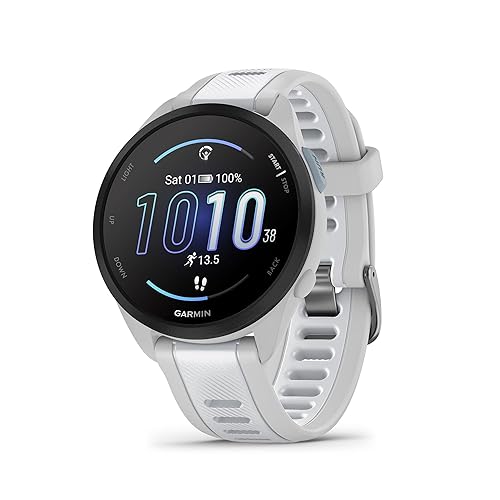 Best for a budget pick with structureGarmin Forerunner 165, Running Smartwatch, 43mm, WhitestoneView on Amazon
- 4
 Best for beginners on a tight planGarmin Forerunner 70, 43mm, BlackView on Amazon
Our Top Picks
Quick Comparison
| Product | Best for | Key feature |
|---|---|---|
| Garmin Forerunner 265S | Runners who want the best overall balance of interval tools and recovery data | Music on the wrist and Garmin Coach daily workouts |
| Garmin Forerunner 965 | Serious runners who want maps and deep training metrics | Advanced training metrics and built-in maps |
| Garmin Forerunner 165 | Budget-minded runners who still want structured speed sessions | Built-in GPS and Garmin Coach suggested workouts |
| Garmin Forerunner 70 | Beginners building a first interval routine | Adaptive training plans with pace, distance and heart rate |
Garmin Forerunner 265S, Running Smartwatch, 42mm
GarminAdvanced Training Metrics & Recovery Insights, Music On Your Wrist, Garmin Coach, Daily Suggested Workouts Forerunner® 265S, Running Smartwatch, 42mm, Black/Amp Yellow
Best for: Runners who want the best overall balance of interval tools and recovery data
This model suits runners who do two or three quality sessions a week and want the watch to plan, display and review them. The smaller 42mm case is a practical choice for people with narrower wrists who still want a full-featured running watch.
Key specs
- 42mm case size, per the listing name
- Running smartwatch with built-in GPS for pace and distance
- Music on the wrist
- Garmin Coach and daily suggested workouts
- Advanced training metrics and recovery insights
Pros
- Structured interval workouts can be built and followed on the wrist
- Recovery insights help you decide when a hard repeat session is safe
- Compact size fits smaller wrists comfortably
Cons
- Smaller screen than the larger Forerunner models
- Advanced mapping features are not the focus of this model
Bottom line: Pick this if you want the most complete interval and recovery toolkit in a smaller, comfortable case.
Garmin Forerunner 965, Running Smartwatch, 47mm, Black/Powder Gray
Maps, Advanced Training Metrics & Recovery Insights, Maps, Music On Your Wrist, Garmin Coach, Daily Suggested Workouts Garmin Forerunner® 965, Running Smartwatch, 47mm, Black/Powder Gray
Best for: Serious runners who want maps and deep training metrics
This is the choice for runners who track a lot of data and want to see it in detail. Owners often describe the larger display as easier to read mid-repeat, which matters when you are checking pace at the end of a 400-meter rep.
Key specs
- 47mm case size, per the listing name
- Built-in maps
- Advanced training metrics and recovery insights
- Music on the wrist
- Garmin Coach and daily suggested workouts
Pros
- Larger screen makes lap splits easier to read at speed
- Deep training metrics support detailed post-workout review
- Maps help when you run unfamiliar track or trail loops
Cons
- The 47mm case can feel large on smaller wrists
- Full feature set is more than a beginner needs
Bottom line: Best for experienced runners who want maximum data and are comfortable with a larger watch.
Garmin Forerunner 165, Running Smartwatch, 43mm, Whitestone
GarminEssential Training & Recovery Features, Built-In GPS for Distance, Pace & Speed, Garmin Coach, Daily Suggested Workouts Forerunner® 165, Running Smartwatch, 43mm, Whitestone
Best for: Budget-minded runners who still want structured speed sessions
This model keeps the core training features, including Garmin Coach and suggested daily workouts, in a smaller, lower-cost package. It suits runners who want guided interval sessions without paying for the top-tier mapping features.
Key specs
- 43mm case size, per the listing name
- Built-in GPS for distance, pace and speed
- Garmin Coach and daily suggested workouts
- Training and recovery features
Pros
- Strong core training features for the category
- Suggested daily workouts remove guesswork from interval planning
- Lighter feel for everyday wear
Cons
- Fewer advanced metrics than the Forerunner 265S or 965
- No maps feature in the listing
Bottom line: A sensible choice if you want structured intervals and recovery guidance without the premium spend.
Garmin Forerunner 70, 43mm, Black
GarminBeginner-Level Running Smartwatch, Pace, Distance and Heart Rate, Daily Suggested Workouts, Adaptive Training Plans Forerunner® 70, 43mm, Black
Best for: Beginners building a first interval routine
The Forerunner 70 is positioned as a beginner-level running watch with adaptive training plans. It suits runners who are new to speed work and want the watch to scale the intensity as fitness improves.
Key specs
- 43mm case size, per the listing name
- Pace, distance and heart rate tracking
- Daily suggested workouts
- Adaptive training plans
Pros
- Adaptive plans reduce the risk of starting intervals too hard
- Simple layout suits first-time watch users
- Heart rate tracking supports easy and hard effort zones
Cons
- Advanced training metrics are limited for experienced runners
- Fewer premium features than higher Forerunner models
Bottom line: The right starting point for a new runner who wants guided, adaptive interval work.
Buying Guide
Interval and workout-building features
Check whether the watch lets you build repeats, recoveries and warm-up or cooldown steps on the device or in the companion app. Structured workouts are what make a garmin vivomove interval training plan repeatable. Look for the ability to set a target pace or effort per step, not just a time.
Good picks for this: Garmin Forerunner 265S, Garmin Forerunner 165
GPS accuracy for pace per lap
Interval sessions depend on accurate lap splits. Built-in GPS is the baseline for outdoor speed work, and multi-band GPS is often described by owners as more stable on tree-lined tracks. Check the listing for GPS details before you buy.
Good picks for this: Garmin Forerunner 965, Garmin Forerunner 165
Screen size and readability at speed
When you are running 400-meter repeats at a fast pace, you glance at the watch for a fraction of a second. A larger display makes splits easier to read, but a 42mm or 43mm case often fits better on smaller wrists. Try the case size against your wrist width before deciding.
Good picks for this: Garmin Forerunner 965, Garmin Forerunner 70
Recovery and training load tools
Interval training is hard on the body, so recovery data matters. Look for features that estimate recovery time or training load after a quality session. These help you space hard days and avoid stacking intervals too often.
Good picks for this: Garmin Forerunner 265S, Garmin Forerunner 965
Guided and adaptive training plans
If you are not sure how many hard sessions to run each week, a coach-style feature can help. Daily suggested workouts and adaptive plans adjust based on your recent performance, which suits runners who prefer structure over self-planning.
Good picks for this: Garmin Forerunner 70, Garmin Forerunner 165
Comfort, weight and wrist fit
You will wear the watch during long intervals and recovery runs, so comfort counts. Measure your wrist before ordering and consider how a larger case sits during speed work. A watch that slides around will skew heart rate readings from the optical sensor.
Good picks for this: Garmin Forerunner 265S, Garmin Forerunner 70
Durability and daily care
Running watches face sweat, rain and frequent charging. Check the manufacturer’s water-resistance rating and follow the care instructions for cleaning after salty sessions. Keep the charging contacts dry and clean to protect the battery over time.
Good picks for this: Garmin Forerunner 965, Garmin Forerunner 165
FAQ
What is garmin vivomove interval training?
It refers to structured interval sessions, such as repeats or ladders, that a Garmin watch can display, pace and log. The watch shows target pace and time for each step so you can run hard intervals and easy recoveries as planned.
Can I build interval workouts on a Garmin watch?
Most current Garmin running watches let you create structured workouts in the app or on the device, with work and rest steps. Check the specific model’s feature list before buying, since not every model supports every workout type.
Do I need a GPS watch for interval training?
GPS is useful outdoors because it measures pace and distance. On a treadmill or indoor track, a watch can still time intervals, though distance accuracy may be lower without GPS.
Which Garmin watch is best for beginners doing intervals?
The Forerunner 70 is positioned for beginners and includes adaptive training plans. The Forerunner 165 is another option if you want guided workouts with a slightly wider feature set.
How often should I do interval sessions?
Many coaches suggest one or two quality sessions per week for most recreational runners, with easy running in between. Recovery matters, so use the watch’s recovery data to space hard days. For personal guidance, consult a qualified coach or medical professional, especially if you have a heart or joint condition.
Is heart rate tracking reliable during intervals?
Optical heart rate sensors can lag during rapid changes in effort. Owners often report better accuracy with a snug fit and a chest strap for hard efforts, though this varies by person and setup.
Do these watches work for treadmill intervals?
Yes, most running watches can time treadmill intervals and show heart rate. Distance may be less precise than outdoor GPS, so you may want to rely on the treadmill display for speed.
Conclusion
For most runners, the Garmin Forerunner 265S offers the best balance of structured interval tools and recovery data. Choose the Forerunner 965 if you want maps and deep metrics, the Forerunner 165 if you want guided workouts on a tighter budget, and the Forerunner 70 if you are new to speed work. Match the watch to how much data you will actually use, and you will get the most from your interval plan.
Sources
- Physical activity guidelines and how vigorous exercise fits into weekly targets (cdc.gov)
- Position guidance on exercise prescription and training intensity (acsm.org)
- Research summaries on high-intensity interval training and cardiovascular health (nih.gov)
Before you buy: helpful guides
Related reading
- Wahoo Fitness App Interval Training vs Garmin Connect: Which Is Better? (2026)
- Interval Training Garmin Forerunner 45: 6 Best Watches for Speed Work
- Garmin Cycling Interval Training: 4 Best Edge Computers Compared (2026)
About Owen Palmer
Owen Palmer is part of our editorial team and reviews and edits our speed & interval running guides, checking product details against manufacturer specifications and owner feedback.
