
 By Owen Palmer
Updated November 2026
Choosing a high-intensity interval training for women resource can feel harder than it should. Some books are written for athletes chasing performance numbers, others are built around home workouts with no equipment, and a few are dense research summaries that assume you already know the physiology. This guide compares six books and guides so you can match one to your goals, schedule and experience level.
Our top picks at a glance
- 1
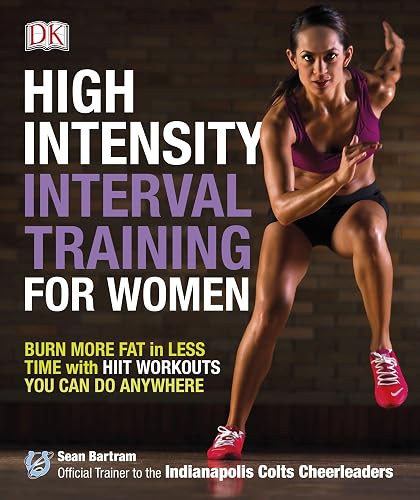 TOP CHOICEBest overallHigh-Intensity Interval Training for Women: Burn More Fat in Less TimeView on Amazon
- 2
 TOP CHOICEBest for beginnersHIIT – High Intensity Interval Training ExplainedView on Amazon
- 3
 TOP CHOICEBest for home workoutsHigh-Intensity Training for Women: 30-Minute WorkoutView on Amazon
- 4
 Best for a full HIIT referenceUltimate Guide to HIIT: High-Intensity Interval TrainingView on Amazon
- 5
 Best for program designScience and Application of High Intensity Interval Training: SolutionsView on Amazon
- 6
 Best budget pickHIIT: The 20-Minute Dream Body with High Intensity Interval Training (View on Amazon
Selection criteria: We looked at how clearly each title explains the training principles behind HIIT, whether the workouts are realistic for women at different fitness levels, how much of the content is practical programming versus theory, and what owners commonly say about usefulness and clarity. None of these picks were physically tested by us; this is a research-based comparison of specifications, author and publisher background, and owner feedback patterns.
Our Top Picks
Quick Comparison
| Product | Best for | Key feature |
|---|---|---|
| High-Intensity Interval Training for Women: Burn More Fat in Less Time with HIIT Workouts You Can Do Anywhere | Women starting HIIT with varied workouts | Workouts designed for women, adaptable to any space |
| Ultimate Guide to HIIT: High-Intensity Interval Training | Readers wanting a broad reference | Comprehensive overview of HIIT formats and structure |
| HIIT – High Intensity Interval Training Explained | Beginners who want the basics first | Plain-language explanation of how intervals work |
| High-Intensity Training for Women: 30-Minute Workout | Time-limited home training | Sessions built around a 30-minute window |
| Science and Application of High Intensity Interval Training: Solutions to the Programming Puzzle | Coaches and advanced trainees | Evidence-based programming and periodization |
| HIIT: The 20-Minute Dream Body with High Intensity Interval Training (HIIT Made Easy in Black&White) | Short, simple daily sessions | Compact 20-minute routines in a no-frills format |
High-Intensity Interval Training for Women: Burn More Fat in Less Time with HIIT Workouts You Can Do Anywhere
High-Intensity Interval Training for Women: Burn More Fat in Less Time with HIIT Workouts You Can Do Anywhere
Best for: Women who want a direct, workout-focused HIIT book they can use without equipment.
This is the most audience-specific title on the list. It is aimed at women who want to fit intense intervals into busy schedules and train in a living room, park or hotel room. If you prefer a book organized by workout rather than by theory, this one fits that style.
Key specs
- Format: paperback book, workout-based layout
- Focus: HIIT sessions for women, designed to be done anywhere
- Training style: bodyweight-oriented interval work
Pros
- Workouts are framed specifically for women’s goals and training contexts
- Minimal equipment needed, which lowers the barrier to starting
- Easy to follow by flipping to a workout rather than reading theory first
Cons
- Less depth on the physiology behind the intervals
- May feel repetitive for readers who already have a training background
Bottom line: A strong first pick for women who want practical, equipment-free HIIT workouts and a simple structure to follow.
Ultimate Guide to HIIT: High-Intensity Interval Training
Ultimate Guide to HIIT: High-Intensity Interval Training
Best for: Readers who want a broad reference covering many HIIT formats in one place.
This guide suits people who like to understand the full range of HIIT options before committing to a routine. It works well as a reference you return to when you want to vary your sessions.
Key specs
- Format: guide covering multiple HIIT formats and structures
- Scope: general HIIT programming rather than a single workout series
Pros
- Good overview of different interval structures and how to vary them
- Useful as an ongoing reference, not just a one-time read
- Covers the general principles that apply across many training goals
Cons
- Not specifically written for women, so some examples may need adapting
- Breadth can mean less detail on any single program
Bottom line: Best for readers who want a wide-angle HIIT reference and are comfortable adapting general guidance to their own needs.
HIIT – High Intensity Interval Training Explained
HIIT – High Intensity Interval Training Explained
Best for: Beginners who want to understand the basics of interval training before starting a program.
If you are new to HIIT and want to know why intervals work, how to set your effort levels, and how to avoid common mistakes, an explanatory title like this is a sensible starting point before jumping into harder sessions.
Key specs
- Format: explanatory guide
- Focus: how HIIT works and how to structure intervals
Pros
- Clear introduction to the concepts behind interval training
- Helps beginners judge effort and recovery intervals correctly
- Good companion to a workout-based book
Cons
- Less workout content than practical workout books
- Beginners may still need a separate program to follow
Bottom line: Ideal for women who want to learn the principles first and build confidence before choosing a workout plan.
High-Intensity Training for Women: 30-Minute Workout
High-Intensity Training for Women: 30-Minute Workout
Best for: Women who have limited time and want complete sessions that fit a 30-minute window.
This title is built around a single time frame, which makes scheduling simple. It suits readers who train before or after work and want a clear session length without planning each workout from scratch.
Key specs
- Session length: 30 minutes
- Audience: women looking for time-efficient training
Pros
- Easy to schedule with a fixed session length
- Complete, ready-to-use workouts with minimal planning
- Well suited to home training
Cons
- Fixed format may not suit readers who want flexible session lengths
- Less background explanation of why each interval is structured as it is
Bottom line: A practical choice for women who want a simple, repeatable 30-minute routine at home.
Science and Application of High Intensity Interval Training: Solutions to the Programming Puzzle
Science and Application of High Intensity Interval Training: Solutions to the Programming Puzzle
Best for: Coaches, advanced trainees and readers who want evidence-based programming logic.
This is the most technical book on the list. It focuses on how to design and adjust interval programs, which makes it a better fit for people who already understand the basics and want to build or refine their own plans.
Key specs
- Format: technical, programming-focused book
- Focus: applying HIIT science to program design
Pros
- Strong on the reasoning behind program design choices
- Useful for coaches writing programs for female clients
- Helps readers adjust intensity and volume with intent
Cons
- Dense for beginners who want ready-made workouts
- Few complete workouts compared with practical workout books
Bottom line: Worth choosing if you want to understand and build your own HIIT programs rather than follow someone else’s.
HIIT: The 20-Minute Dream Body with High Intensity Interval Training (HIIT Made Easy in Black&White)
HIIT: The 20-Minute Dream Body with High Intensity Interval Training (HIIT Made Easy in Black&White)
Best for: Readers who want short, straightforward daily sessions in a simple format.
This title is a compact, no-nonsense option. Its 20-minute framing and simple layout make it easy to pick up and use on days when you have little time or motivation to plan.
Key specs
- Session length: about 20 minutes
- Format: simple, black-and-white layout
Pros
- Short sessions are easy to repeat consistently
- Simple layout makes it quick to follow
- Typically a budget-friendly option within the group
Cons
- Limited depth on programming and progression
- Print-focused layout may feel basic to some readers
Bottom line: A good budget pick for women who want a simple, short routine and do not need detailed explanations.
Buying Guide
Match the book to your experience level
Beginners usually benefit from an explanatory title first, then a workout book. Experienced trainees often want programming detail. Choosing a book well above or below your level leads to either confusion or boredom.
Good picks for this: HIIT – High Intensity Interval Training Explained, Science and Application of High Intensity Interval Training
Check for workouts designed for women
Some HIIT books are general fitness titles. If you want examples, progressions and goals that reflect women’s training contexts, look for explicit audience framing in the title or introduction.
Good picks for this: High-Intensity Interval Training for Women, High-Intensity Training for Women: 30-Minute Workout
Consider how much time you have
A book built around 20 or 30 minute sessions is easier to fit into a busy week than one that assumes an hour or more. Look at the typical session length in the table of contents before buying.
Good picks for this: High-Intensity Training for Women: 30-Minute Workout, HIIT: The 20-Minute Dream Body with High Intensity Interval Training
Decide whether you need theory or workouts
Workout-based books help you train today. Theory-based books help you understand why intervals are structured the way they are and how to adjust them. Many readers benefit from one of each over time.
Good picks for this: High-Intensity Interval Training for Women, Ultimate Guide to HIIT: High-Intensity Interval Training
Look at equipment requirements
Some HIIT plans rely on bodyweight movements, while others assume gym equipment such as kettlebells, rowers or bikes. Check whether the book’s workouts match what you have at home or at your gym.
Good picks for this: High-Intensity Interval Training for Women, HIIT: The 20-Minute Dream Body with High Intensity Interval Training
Check the level of detail on progression
A good HIIT resource explains how to progress intensity, duration and recovery over weeks, not just how to do one session. This matters most if you plan to train consistently for months.
Good picks for this: Science and Application of High Intensity Interval Training, Ultimate Guide to HIIT: High-Intensity Interval Training
Think about durability and format
Paperback books are light and easy to keep near your workout space, but a spiral or durable binding helps if you lay the book open during sessions. Check the format details before you buy, since layouts vary across editions.
Good picks for this: HIIT: The 20-Minute Dream Body with High Intensity Interval Training, HIIT – High Intensity Interval Training Explained
FAQ
Is HIIT safe for women to start with?
Many women can start HIIT with appropriate modifications, but intervals are demanding. Start with shorter work periods, longer recovery and lower intensity, and build gradually. If you have a heart condition, joint problems, pregnancy or other health concerns, consult a doctor or qualified professional before starting.
How many times a week should I do high-intensity interval training?
Most beginner programs use two to three HIIT sessions per week, with rest or low-intensity activity on other days. Recovery needs vary, so adjust based on how you feel and how your sleep and energy are holding up.
Can I learn HIIT from a book alone?
A book can teach you workouts and principles, but it cannot check your form or adjust intensity to your body in real time. Use a book as a guide, film yourself to check technique, and consider working with a qualified coach if you are new to exercise.
How long should a HIIT session last?
Many HIIT sessions run 15 to 30 minutes including warm-up and cool-down. The actual hard intervals are often much shorter than the full session length. Books built around a set time frame, like 20 or 30 minutes, make this easy to plan.
Do I need equipment for high-intensity interval training?
No. Many effective HIIT workouts use only bodyweight movements such as squats, lunges, mountain climbers and jumping variations. Equipment such as kettlebells, bikes or rowers can add variety but is not required.
What should I do between HIIT sessions?
Easy walking, mobility work, stretching and strength training on non-HIIT days all work well. Adequate sleep and nutrition support recovery. Avoid stacking two hard interval days back to back if you feel run down.
Which book should a beginner start with?
Beginners often benefit from an explanatory title first to understand intervals and effort levels, then a workout-based book to follow a plan. If you prefer to start right away, pick a workout book with clear modifications.
Conclusion
For most women starting out, a workout-based title such as the women-focused HIIT book is the most practical first purchase, especially if you train at home. Readers who want to understand the principles before training should consider the explanatory guide first. If you are a coach or advanced trainee designing programs, the science-focused title offers the most depth. For short daily sessions on a tight budget, the 20-minute book is a simple, straightforward option. Whichever you choose, pair it with sensible progression and rest, and consult a professional if you have health concerns.
Sources
- Physical activity guidelines for adults, including recommended weekly activity levels (cdc.gov)
- Position guidance from the American College of Sports Medicine on exercise prescription and intensity (acsm.org)
- Research summaries on high-intensity interval training and health outcomes (nih.gov)
Related reading
- Rowing High Intensity Interval Training: 5 Best Books and Guides (2026)
- High Intensity Interval Training Timer: 6 Best Picks for Every Workout (2026)
- High Intensity Interval Training Timer App: A Practical Guide (2026)
- High Intensity Interval Training Spinning: A Step-by-Step Guide for Beginners
- High Intensity Interval Training Spin Bike: 6 Best Picks for Home (2026)
- High Intensity Interval Training Shoes: 7 Best Picks for Every Workout (2026)
About Owen Palmer
Owen Palmer is part of our editorial team and reviews and edits our speed & interval running guides, checking product details against manufacturer specifications and owner feedback.





