
 By Owen Palmer
Updated November 2026
Finding the best heart rate monitor for interval training comes down to one question: can the device keep up when your heart rate jumps from easy to near-max and back again within a minute? Interval sessions punish sloppy sensors. Lag, dropouts and slow zone changes make it hard to hit your work and recovery targets. This guide compares seven monitors on the criteria that matter most for speed work: response time, signal stability, connectivity with common watches and apps, comfort during hard efforts, and battery life. Everything here is based on manufacturer specifications, brand reputation and patterns owners commonly report, not on our own testing.
Our top picks at a glance
- 1
 TOP CHOICEBest overallPolar H10 Heart Rate Monitor Chest StrapView on Amazon
- 2
 TOP CHOICEBest for arm wearPolar Verity SenseView on Amazon
- 3
 TOP CHOICEBest budget pickCOOSPO H6 Heart Rate Monitor Chest StrapView on Amazon
- 4
 Best for watch usersCOROS Heart Rate MonitorView on Amazon
- 5
 Best for zone alertsCOOSPO HW807 Heart Rate Monitor ArmbandView on Amazon
- 6
 Best for simple trackingHeart Rate Monitor and Chest Strap Sports WatchView on Amazon
- 7
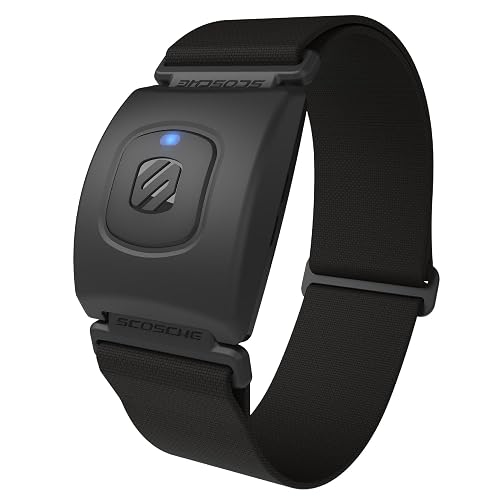 Best for dual-protocol pairingScosche Rhythm Heart Rate Monitor ArmbandView on Amazon
Our Top Picks
Quick Comparison
| Product | Best for | Key feature |
|---|---|---|
| Polar H10 Heart Rate Monitor Chest Strap | Overall interval accuracy | Chest strap with ANT+ and Bluetooth |
| Polar Verity Sense | Arm wear | Optical armband with dual Bluetooth |
| COOSPO H6 Heart Rate Monitor Chest Strap | Budget pick | IP67 chest strap with ANT+ |
| COROS Heart Rate Monitor | Watch users | Auto-wear detection and multi-device connection |
| COOSPO HW807 Heart Rate Monitor Armband | Zone alerts | LED heart rate zone indicator |
| Heart Rate Monitor and Chest Strap Sports Watch | Simple tracking | Built-in stopwatch and hourly chime |
| Scosche Rhythm Heart Rate Monitor Armband | Dual-protocol pairing | Dual-band ANT+ and Bluetooth Smart |
Polar H10 Heart Rate Monitor Chest Strap
Polar H10 Heart Rate Monitor Chest Strap – ANT + Bluetooth, Waterproof HR Sensor for Men and Women
Best for: Overall interval accuracy
This is a strong fit for runners who do track repeats, hill sprints or structured HIIT and want the sensor most likely to track fast heart rate changes cleanly. Chest straps generally read electrical heart signals rather than blood flow, which is why they tend to respond faster than optical sensors during abrupt pace changes.
Key specs
- Chest strap format
- ANT+ and Bluetooth connectivity
- Waterproof design, as stated in the listing
Pros
- Chest strap design typically tracks rapid heart rate shifts well
- Broad compatibility with watches, bike computers and training apps
- Waterproof build suits sweaty, rainy sessions
Cons
- Requires moistening the electrodes for best contact
- Strap fit takes some adjusting before the first session
Bottom line: The safest all-around choice for runners who push hard intervals and want reliable numbers. Pick this if accuracy during sprints matters more than comfort.
Polar Verity Sense
Polar Verity Sense – Optical Heart Rate Monitor Armband – ANT+, Dual Bluetooth
Best for: Arm wear
Runners who dislike chest straps but still want a dedicated sensor for intervals should look here. The optical armband approach reads blood flow at the skin, which avoids chafing and strap adjustment.
Key specs
- Optical armband format
- ANT+ and dual Bluetooth connectivity
Pros
- No chest strap to position or moisten
- Connects to several devices at once
- Comfortable for long sessions
Cons
- Optical readings can lag during very abrupt sprints
- Arm placement and fit affect accuracy
Bottom line: A good fit for runners who prioritize comfort and can keep the armband snug. Choose it if you mostly run steady tempo and moderate intervals.
COOSPO H6 Heart Rate Monitor Chest Strap
COOSPO H6 Heart Rate Monitor Chest Strap Bluetooth 4.0 ANT+ IP67 Chest Heart Rate Sensor for Peloton Polar DDP Yoga Map My Ride Garmin Sports Watches
Best for: Budget pick
This suits athletes who want chest strap accuracy without premium pricing, and who already own a watch or app that supports ANT+ or Bluetooth.
Key specs
- Chest strap format
- Bluetooth 4.0 and ANT+
- IP67 water resistance, as listed
Pros
- Strong value for a chest strap
- Wide compatibility with fitness platforms named in the listing
- IP67 rating handles rain and sweat
Cons
- Strap comfort varies between users
- Some owners report needing to re-pair after updates
Bottom line: The right pick for runners who want a chest strap on a budget. Choose it if you are comfortable with a little setup.
COROS Heart Rate Monitor
Comfort,Easy to wear, Advanced Sensor, Precise Data, Bluetooth, 38 Hours Battery Life, Connects up to 3 Devices at Once COROS Heart Rate Monitor, Auto-wear Detection
Best for: Watch users
Runners already wearing a COROS or other GPS watch who want a sensor that connects reliably to multiple devices during interval sessions.
Key specs
- Bluetooth connectivity, connects up to 3 devices at once per the listing
- Auto-wear detection
- Battery life listed at 38 hours
Pros
- Auto-wear detection reduces manual start-up
- Multi-device connection is useful for watch plus app setups
- Long listed battery life
Cons
- Best value depends on owning compatible devices
- Fit and placement still affect readings
Bottom line: A practical choice for runners who want seamless watch integration. Pick it if you run with a watch and want simple pairing.
COOSPO HW807 Heart Rate Monitor Armband
COOSPO Heart Rate Monitor Armband HW807, Bluetooth 5.0 ANT+ HRM with HR Zone LED Indicator, Tracking Heartbeat HRV for Fitness Training, Work with Peloton/Polar/Wahoo/Strava/DDP Yoga
Best for: Zone alerts
Runners who train by heart rate zone and want a visual cue without looking at a watch screen mid-interval will find the built-in LED helpful.
Key specs
- Armband format with HR zone LED indicator
- Bluetooth 5.0 and ANT+
- HRV tracking, as listed
Pros
- LED zone indicator gives at-a-glance feedback
- Wide platform compatibility named in the listing
- HRV tracking adds recovery data
Cons
- Optical armband readings can trail sharp spikes
- LED can be hard to read in bright sun
Bottom line: Good for zone-based interval training and athletes who like visual feedback. Choose it if you want the device to guide intensity directly.
Heart Rate Monitor and Chest Strap Sports Watch
Heart Rate Monitor and Chest Strap, Exercise Heart Rate Monitor, Sports Watch with HRM, Waterproof, Stopwatch, Hourly Chime T007
Best for: Simple tracking
Beginners and casual runners who want a standalone device with a stopwatch and heart rate readout, without setting up a phone app.
Key specs
- Chest strap with sports watch display
- Waterproof design, as listed
- Stopwatch and hourly chime
Pros
- No app or phone needed to view heart rate
- Stopwatch helps time work and rest intervals
- Simple controls for quick use
Cons
- Limited data export compared with app-connected sensors
- Display can be hard to read while moving fast
Bottom line: A solid starter option for runners new to heart rate training. Pick it if you want simplicity over data depth.
Scosche Rhythm Heart Rate Monitor Armband
Scosche Rhythm Heart Rate Monitor Armband – Optical Heart Rate Armband Monitor with Dual Band Radio ANT+ and Bluetooth Smart
Best for: Dual-protocol pairing
Athletes who use several platforms, such as a watch, a bike computer and a training app, and want one armband that can connect to all of them.
Key specs
- Optical armband format
- Dual-band ANT+ and Bluetooth Smart
Pros
- Dual-band connectivity supports many devices
- No chest strap required
- Useful for mixed-sport athletes
Cons
- Optical sensing can lag during fast interval changes
- Fit needs to be snug for steady readings
Bottom line: A flexible armband for multi-device users. Choose it if connectivity across platforms is your priority.
Buying Guide
Sensor Type: Chest Strap vs. Optical Armband
Chest straps read the heart’s electrical signal and generally respond faster during abrupt sprints and short rest periods. Optical armbands read blood flow at the skin, which is more comfortable but can trail rapid changes slightly. For track repeats and hard HIIT, a chest strap is usually the more reliable choice.
Good picks for this: Polar H10 Heart Rate Monitor Chest Strap, COOSPO H6 Heart Rate Monitor Chest Strap
Response Time and Accuracy During Sprints
Look for sensors that manufacturers describe as suitable for high-intensity training. Fast response matters most when you go from a 30-second hard effort to a short jog recovery, because a slow sensor may show the peak after you have already started recovering.
Good picks for this: Polar H10 Heart Rate Monitor Chest Strap, COROS Heart Rate Monitor
Connectivity: ANT+ and Bluetooth
Check which protocols your watch, bike computer or app supports. ANT+ is common on Garmin and many bike computers, while Bluetooth is standard on phones and newer watches. Dual-band or multi-protocol sensors give more flexibility if you use several devices.
Good picks for this: Scosche Rhythm Heart Rate Monitor Armband, COOSPO HW807 Heart Rate Monitor Armband
Fit and Comfort for Hard Efforts
A chest strap should sit snugly just below the chest muscles, and armbands should be tight enough to prevent slipping but not so tight that they restrict circulation. Improper fit is one of the most common reasons owners report erratic readings. Adjust before your first interval session, not during it.
Good picks for this: Polar Verity Sense, Heart Rate Monitor and Chest Strap Sports Watch
Zone Feedback and Display
If you train by heart rate zones, look for a device with visual or vibration alerts, or one that pairs with a watch showing live zones. An LED indicator can be helpful, but check whether it is visible in bright conditions.
Good picks for this: COOSPO HW807 Heart Rate Monitor Armband, Heart Rate Monitor and Chest Strap Sports Watch
Battery Life and Charging
Interval sessions are usually short, so battery life matters more for training volume than for single workouts. Listed battery life varies widely, and some models use replaceable batteries while others charge. Check the specification and your training schedule before buying.
Good picks for this: COROS Heart Rate Monitor, Polar Verity Sense
Durability and Water Resistance
Sweat, rain and frequent washing take a toll on sensors. Look for a stated water resistance rating such as IP67, and rinse the strap or armband after sessions. Care instructions from the manufacturer are worth following to extend the life of the sensor.
Good picks for this: COOSPO H6 Heart Rate Monitor Chest Strap, Polar H10 Heart Rate Monitor Chest Strap
FAQ
Is a chest strap more accurate than an armband for intervals?
Chest straps generally respond faster to rapid heart rate changes, which is why many runners prefer them for track work and hard HIIT. Good optical armbands can still be useful, especially for steady efforts, but they may lag slightly during abrupt sprints.
Can I use one heart rate monitor with more than one device?
Many monitors support ANT+ and Bluetooth, and some connect to several devices at once. Check the protocols listed in the specification and confirm your watch or app supports them.
How should I wear a chest strap for interval training?
Position the strap just below the chest muscles, keep it snug, and moisten the electrodes before putting it on. Adjust fit before starting your session.
Why does my heart rate reading jump or drop during a workout?
Common causes include loose strap placement, dry electrodes, interference from other devices, and optical sensors shifting on the arm. Re-check fit and sensor contact first.
Do I need a heart rate monitor for interval training at all?
No, but heart rate gives a useful measure of effort when pace is affected by terrain, heat or fatigue. Many runners combine pace targets with heart rate zones for better control.
How often should I replace my heart rate monitor?
There is no universal schedule. Replace it if the battery no longer holds charge, the electrodes wear out, or readings become consistently unreliable. Follow the manufacturer’s guidance on lifespan.
Conclusion
For most runners doing structured intervals, the Polar H10 Heart Rate Monitor Chest Strap is the most dependable overall choice. If you prefer not to wear a strap, the Polar Verity Sense offers a comfortable armband option. Budget-minded athletes will find the COOSPO H6 Heart Rate Monitor Chest Strap a sensible chest strap alternative, while COROS Heart Rate Monitor suits watch users and the COOSPO HW807 Heart Rate Monitor Armband suits zone-based training. Beginners may prefer the simple Heart Rate Monitor and Chest Strap Sports Watch, and multi-device users may value the Scosche Rhythm Heart Rate Monitor Armband. Choose based on how fast your intervals change, what devices you already own, and how much comfort matters during hard efforts.
For more on applying heart rate to speed work, see Heart Rate Monitor Interval Training: A Step-by-Step Guide to Smarter Speed Work and Interval Training Running Heart Rate: Zones and Splits That Work. If you are choosing between sensors, Best Chest Strap Heart Rate Monitors offers more detail on chest strap options, and Best GPS Watches for Interval Training can help if you plan to pair a monitor with a watch. For target zones, Heart Rate for High Intensity Interval Training: Zones and Targets (2026) is a useful reference.
Sources
- General guidance on physical activity intensity and how to monitor effort (cdc.gov)
- Research summaries on heart rate responses to high-intensity exercise (nih.gov)
- Position guidance on exercise intensity and training prescription (acsm.org)
Related reading
- Interval Training Heart Rate: A Step-by-Step Guide to Smarter Speed Work
- What Is Interval Walking Training? 7 Best Books and Guides Compared (2026)
- Trail Running Interval Training Books: 6 Best Picks for 2026
About Owen Palmer
Owen Palmer is part of our editorial team and reviews and edits our speed & interval running guides, checking product details against manufacturer specifications and owner feedback.
