

Quick answer
Our overall pick for the best trail running shoes is the Brooks Cascadia 19 for its adaptive stability and all-around traction. Other picks suit runners seeking waterproofing, maximal cushioning for long distances, or a minimalist, foot-shaped fit.
Choosing the right trail running shoes means matching your gear to the ground. The best trail running shoes combine traction, protection, and comfort for the specific terrain you run on. We compared manufacturer specifications to find 12 options suited for different trails and runner preferences.
Quick picks
- Best overall trail shoe: Brooks Men’s Cascadia 19 (see on Amazon)
- Best waterproof trail shoe: Brooks Women’s Cascadia 19 GTX (see on Amazon)
- Best for long-distance comfort: Brooks Men’s Caldera 8 (see on Amazon)
- Best minimalist wide toe box: WHITIN Men’s Minimalist Trail (see on Amazon)
12 Best Trail Running Shoes compared
| # | Product | Best for | Key Cushioning | Key Traction Feature | Protection Feature |
|---|---|---|---|---|---|
| 1 | Brooks Men’s Cascadia 19 | Best overall trail shoe | DNA LOFT v3 | TrailTack Green outsole | Ballistic Rock Shield, reinforced toe cap |
| 2 | Brooks Women’s Cascadia 19 | Best for women seeking adaptive stability | DNA LOFT v3 | TrailTack Green outsole | Ballistic Rock Shield, reinforced toe cap |
| 3 | ALTRA Men’s Lone Peak 8 | Best for versatile trail-to-town style | EGO midsole | MaxTrac outsole with TrailClaw | Ripstop mesh upper |
| 4 | ALTRA Men’s Lone Peak 9 | Best with APMA Seal of Acceptance | Not listed | MaxTrac outsole | StoneGuard |
| 5 | Brooks Men’s Caldera 8 | Best for long-distance comfort | DNA LOFT v3 | Flex groove outsole | Raised sidewalls, durable upper |
| 6 | Brooks Women’s Caldera 8 | Best for women’s ultra-distance runs | DNA LOFT v3 | Flex groove outsole | Raised sidewalls |
| 7 | New Balance Men’s 410 V9 | Best with Fresh Foam and BIO Foam | Fresh Foam & BIO Foam | AT Tread outsole | Reinforced overlays |
| 8 | Saucony Men’s Excursion TR14 | Best with carbon rubber lugs | VERSARUN | Carbon rubber lugs | Supportive overlays |
| 9 | New Balance DynaSoft TEKTREL V1 | Best with lifestyle-inspired style | DynaSoft midsole | AT Tread outsole | Regrind upper overlays |
| 10 | WHITIN Men’s Minimalist Trail | Best minimalist wide toe box | Minimalist (removable sockliner) | True rubber sole | Not listed |
| 11 | Merrell Men’s Vapor Glove 6 Leather | Best minimalist leather trail shoe | Minimalist | Vibram EcoStep outsole | Leather upper |
| 12 | Brooks Women’s Cascadia 19 GTX | Best waterproof trail shoe | DNA LOFT v3 | TrailTack Green outsole | GORE-TEX membrane |
How we chose
We selected these 12 best trail running shoes by comparing manufacturer listings and specifications on Amazon as of October 2026. We did not test any products hands-on. Our choices are based on stated features like outsole traction, midsole cushioning, upper protection, and specific design technologies.
Best for Rugged & Adaptive Trails
These shoes feature systems designed for stability and grip on uneven, technical terrain.
1. Best overall trail shoe: Brooks Men’s Cascadia 19

Pros
- Trail Adapt System with Ballistic Rock Shield for stability
- TrailTack Green outsole with recycled content
- Reinforced toe cap and mudguard for protection
Cons
- The listing does not mention a waterproof version.
The Brooks Men’s Cascadia 19 is built for trail enthusiasts seeking confidence on any terrain. It features a TrailTack Green rubber outsole for enhanced traction in wet and dry conditions and nitro-infused DNA LOFT v3 cushioning for a soft, responsive ride. The updated Trail Adapt System includes a flexible Ballistic Rock Shield for stability and adaptability on uneven ground.
Best for: Runners who want a balanced, adaptive shoe for varied and technical trail conditions.
2. Best for women seeking adaptive stability: Brooks Women’s Cascadia 19

Pros
- Trail Adapt System for stability
- DNA LOFT v3 cushioning
- Reinforced toe cap and mudguard
Cons
- The listing does not mention a waterproof version.
The Brooks Women’s Cascadia 19 offers the same adaptive trail performance as the men’s version. It features the Trail Adapt System with a Ballistic Rock Shield, DNA LOFT v3 cushioning, and a TrailTack Green outsole for traction. The upper includes a reinforced toe cap and mudguard for protection.
Best for: Women runners looking for a stable, adaptable shoe with all-around trail traction.
3. Best for versatile trail-to-town style: ALTRA Men’s Lone Peak 8

Pros
- Versatile design for trail and casual wear
- MaxTrac outsole with TrailClaw lugs
- Durable, breathable ripstop mesh upper
Cons
- The listing does not mention a rock plate or specific waterproofing.
The ALTRA Men’s Lone Peak 8 features a versatile, adventure-ready design that transitions from trails to casual wear. It has a MaxTrac outsole with TrailClaw lugs for reliable traction on various surfaces and a lightweight EGO midsole for responsive cushioning and energy return. The upper is made from durable, abrasion-resistant ripstop mesh.
Best for: Runners who want one shoe for both trail performance and everyday comfort.
4. Best with APMA Seal of Acceptance: ALTRA Men’s Lone Peak 9

Pros
- APMA Seal of Acceptance
- MaxTrac outsole for grip
- StoneGuard for underfoot protection
Cons
- The listing does not mention specific cushioning technology.
The ALTRA Men’s Lone Peak 9 features a grippy MaxTrac outsole for traction and a StoneGuard for underfoot protection from rocks and debris. This model has received the American Podiatric Medical Association (APMA) Seal of Acceptance for promoting good foot health.
Best for: Runners interested in a trail shoe recognized by podiatrists for supporting foot health.
Best for Long-Distance & Max Cushion
Built with high-stack, plush midsoles to protect and comfort over many miles on rough trails.
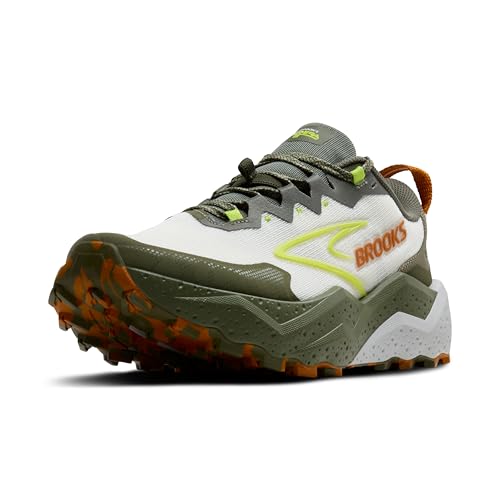
5. Best for long-distance comfort: Brooks Men’s Caldera 8
Pros
- High-stacked, nitrogen-infused DNA LOFT v3 cushioning
- Widened base and raised sidewalls for stability
- Breathable, scratch-resistant upper
Cons
- Higher stack height may not suit runners preferring a low-profile feel.
The Brooks Men’s Caldera 8 is an ultra trail running shoe designed for long distances over rough terrain. It features super-soft, high-stacked DNA LOFT v3 cushioning for protection from rocks and roots. The shoe has a widened base, raised sidewalls, and flex grooves in the outsole for a stable, adaptable ride, plus a breathable, durable upper.
Best for: Ultra-distance runners and those seeking maximum plush cushioning on rugged trails.
6. Best for women’s ultra-distance runs: Brooks Women’s Caldera 8

Pros
- High-stacked DNA LOFT v3 cushioning
- Raised sidewalls and widened base for stability
- Breathable, durable upper materials
Cons
- Higher stack height may not suit runners preferring a low-profile feel.
The Brooks Women’s Caldera 8 is built for going the ultimate distance on trails. It uses high-stacked, nitrogen-infused DNA LOFT v3 cushioning for plush protection from rough terrain. The design includes raised sidewalls and a widened base for security and stability, along with a breathable, adaptable upper.
Best for: Women tackling long-distance trail runs who prioritize super-soft, protective cushioning.
7. Best with Fresh Foam and BIO Foam: New Balance Men’s 410 V9

Pros
- Fresh Foam and BIO Foam midsole cushioning
- AT Tread outsole for all-terrain traction
- Reinforced overlays and breathable mesh
Cons
- The listing does not mention a rock plate or specific waterproofing.
The New Balance Men’s 410 V9 combines Fresh Foam and BIO Foam cushioning for underfoot comfort and shock absorption on trails. It has an AT Tread outsole for versatile all-terrain traction and a construction with reinforced overlays and breathable mesh for durability and airflow.
Best for: Runners who want a comfortable, dual-foam cushioning system for varied trail and road use.
Best for All-Around Trail Performance
Versatile trail shoes offering reliable traction and cushioning for various conditions.
8. Best with carbon rubber lugs: Saucony Men’s Excursion TR14

Pros
- Carbon rubber outsole lugs for grip
- VERSARUN cushioning
- Trail-specific mesh upper with supportive overlays
Cons
- The listing does not mention a rock plate or specific waterproofing.
The Saucony Men’s Excursion TR14 is a trail running shoe with grippy carbon rubber lugs on the outsole for solid footing. It uses VERSARUN cushioning for underfoot comfort and has a trail-specific mesh upper with supportive overlays to lock the foot in place and protect from debris.
Best for: Runners looking for reliable, durable traction from carbon rubber on mixed trails.
9. Best with lifestyle-inspired style: New Balance DynaSoft TEKTREL V1

Pros
- DynaSoft midsole for responsive comfort
- AT Tread outsole for versatile traction
- Lifestyle-inspired upper design
Cons
- The listing does not mention a rock plate or specific waterproofing.
The New Balance Men’s DynaSoft TEKTREL V1 combines trail performance with a lifestyle-inspired upper design. It uses a DynaSoft midsole for responsive, plush comfort and an AT Tread outsole for versatile on- and off-road traction. The upper includes regrind overlays for added durability.
Best for: Runners who want a trail shoe that blends performance features with casual aesthetics.
Best for Minimalist & Natural Movement
Designed for a low-profile, ground-connected feel with a focus on natural foot shape.
10. Best minimalist wide toe box: WHITIN Men’s Minimalist Trail

Pros
- Wide toe box for toe splay
- Removable sockliner
- True rubber sole for ground feedback
Cons
- Minimal cushioning and protection; not for technical, rocky trails.
The WHITIN Men’s Trail Running Minimalist Shoes are designed for a natural, barefoot-inspired feel. They feature a wide toe box to let toes spread, a true rubber sole for protection and ground feedback, and a removable sockliner. The listing states they are produced using animal-free processes.
Best for: Runners and trainers seeking a minimalist, foot-shaped shoe for natural movement.
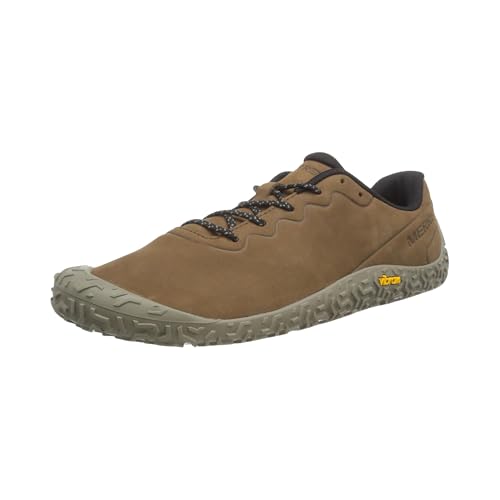
11. Best minimalist leather trail shoe: Merrell Men’s Vapor Glove 6 Leather
Pros
- 100% leather upper
- Vibram EcoStep outsole for grip
- Lightweight, minimalist design
Cons
- Very minimal design offers little underfoot protection or cushioning.
The Merrell Men’s Vapor Glove 6 Leather is a minimalist trail running shoe with a 100% leather upper for a casual, everyday style. It features a Vibram EcoStep outsole that wraps the foot for grip and connection, offering maximum lightweight performance for minimalist training and running.
Best for: Minimalist runners who prefer a leather upper for durability and a more casual look.
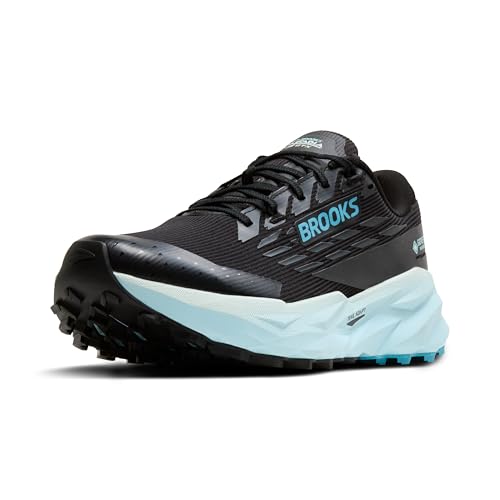
12. Best waterproof trail shoe: Brooks Women’s Cascadia 19 GTX
Pros
- GORE-TEX Invisible Fit waterproof membrane
- TrailTack Green outsole for traction
- DNA LOFT v3 cushioning
Cons
- Waterproof membranes can reduce breathability in very hot conditions.
The Brooks Women’s Cascadia 19 GTX is a waterproof trail running shoe with a GORE-TEX Invisible Fit membrane bonded to the upper for breathable weather protection. It retains the TrailTack Green outsole for traction and the DNA LOFT v3 cushioning for a responsive ride, making it suitable for wet conditions.
Best for: Runners who need reliable waterproof and breathable protection from rain and wet trails.
How to choose trail running shoes
The right trail running shoes depend on the terrain you run and what you need from the shoe. Unlike road shoes, trail runners are built with specific features for off-road conditions. The goal is to find a balance between traction, protection, and comfort that matches your typical runs.
What to look for
- Traction & Outsole: Look for the rubber compound and lug pattern described. Deep, multi-directional lugs provide grip in loose dirt and mud, while harder rubber compounds with shallower lugs may be better for rocky, hard-packed trails. Some outsoles are made for ‘all-terrain’ use.
- Cushioning & Protection: Midsole technology determines underfoot feel and protection. Plush, high-stack cushioning absorbs impact on long runs, while firmer, lower-profile midsoles offer more ground feel. Protection features like rock plates, toe guards, and mud flaps shield your feet from debris and sharp objects.
- Fit & Upper: The upper should secure your foot without pressure points. Look for materials described as breathable mesh, durable ripstop, or waterproof membranes. A secure heel counter and overlays can improve stability on uneven ground. Some shoes offer a wider toe box for natural toe splay.
Consider how you run. If you log high mileage on rugged mountain trails, prioritize cushioning and rock protection. For wet climates or creek crossings, a waterproof or quick-drying model may be essential. Always follow the manufacturer’s fit guide, as sizing can vary between brands and models. For more on finding the right fit, see our guide to running shoes.
FAQ
What’s the difference between trail running shoes and hiking shoes?
Trail running shoes are generally lighter, more flexible, and have more responsive cushioning than hiking shoes or boots. They are designed for the dynamic movement of running, with outsoles optimized for forward traction. Hiking shoes often have stiffer, more supportive construction and heavier-duty outsoles for carrying weight over long distances at a walking pace.
Do I need waterproof trail running shoes?
Waterproof shoes, often with a GORE-TEX or similar membrane, are beneficial for running in consistently wet, cold conditions, light snow, or through shallow puddles. However, they can be less breathable in hot weather and will not drain water if submerged. For warm, humid climates or runs with deep water crossings, a non-waterproof, quick-drying shoe may be more comfortable.
What is a rock plate in a trail shoe?
A rock plate is a thin, flexible shield embedded in the midsole or between the midsole and outsole. Its purpose is to protect the bottom of your foot from sharp rocks, roots, and other pointy objects on the trail without sacrificing too much flexibility. It’s a key feature for running on very technical, rocky terrain.
Are minimalist trail running shoes good for beginners?
Minimalist shoes, which have little to no cushioning and a low heel-to-toe drop, encourage a more natural foot strike. However, they require stronger foot and lower leg muscles and an adjustment period. Beginners new to running or trail running may find shoes with moderate cushioning and protection more comfortable and forgiving as they build mileage and technique.
References
- Amazon product listings and manufacturer specifications (accessed October 2026)
- American College of Sports Medicine (ACSM)
- National Weather Service – Heat Safety


