

Quick answer
Our overall pick for interval training is the Garmin Forerunner 165 for its adaptive daily suggested workouts and training effect analysis. The Garmin Forerunner 55 is a strong choice for runners who want structured race plans, while the mibro GS Active2 suits those looking for pre-set running plans and dual-band GPS precision.
Interval training pushes your pace and recovery in structured bursts, and the right GPS watch can be your coach on the wrist. The best watch for interval training provides precise tracking, insightful performance feedback, and tools to plan your next hard effort. We compared manufacturer listings and specifications to find models that support this specific training style, from adaptive daily workouts to detailed post-run analysis.
Our picks at a glance

Pros
- Provides personalized daily suggested workouts that adapt to performance
- Shows training effect and recovery time for workout planning
- Lightweight design with AMOLED touchscreen and button controls
- Over 25 built-in sports profiles including HIIT
Cons
- The listing does not mention compatibility with structured interval workout creation
- GPS battery life is up to 19 hours, which may require more frequent charging for ultra-long training blocks
Pros
- Tracks pace and distance with built-in GPS across 170+ sports modes
- 5ATM water resistance suitable for pool swimming
- Includes music control and Bluetooth call functionality
- Monitors heart rate, blood oxygen, and sleep
Cons
- The listing does not mention any structured workout or interval training features
- Square shape may not be preferred by all users
Pros
- Offers daily suggested workouts and PacePro for race pace strategy
- Provides race time predictions and finish time estimates
- Long battery life: up to 20 hours in GPS mode
- Tracks a variety of activities including HIIT and track runs
Cons
- PacePro feature is not compatible with on-device courses
- The listing does not specify if it has a touchscreen

Pros
- Includes eight pre-set running plans for distances from 5K to marathon
- Dual-band GPS for precise positioning and route navigation
- Lightweight design (39.9g) with an AMOLED display
- Analyzes running metrics like cadence, stride length, and VO₂ max
Cons
- GPS mode battery life is approximately 15 hours
- The listing does not mention adaptive or daily workout suggestions

Pros
- Allows answering and making Bluetooth calls directly from the watch
- Large 1.95-inch touchscreen display for clear visibility
- Tracks over 100 sports modes with built-in GPS
- Monitors heart rate, blood oxygen, and sleep stages
Cons
- Water resistance is listed as 10 feet, which is less than other picks
- The listing does not mention any interval-specific or guided workout features
How we chose
Our picks come from comparing manufacturer listings and specifications on Amazon as of October 2026. We did not test, use, or review these products hands-on. We focused on features relevant to interval training: workout planning and guidance tools, detailed performance metrics, GPS accuracy claims, battery life in active modes, and overall design for sport.
Best GPS Watches for Interval Training: our picks in detail
1. Best overall: Garmin Forerunner 165
The Garmin Forerunner 165 is a running smartwatch with a built-in GPS for tracking pace and distance and a wrist-based heart rate monitor. It features a brilliant AMOLED touchscreen with traditional button controls and has a lightweight, 43mm fiber-reinforced polymer case.
For interval training, it offers personalized daily suggested workouts that adapt based on your performance and recovery. You can see how your workouts impact your fitness with training effect and training effect labels, and the recovery time feature advises how long to rest before your next high-effort session. It includes over 25 built-in activity profiles, such as running, cycling, HIIT, and strength.
Best for: Runners who want adaptive, daily workout suggestions and detailed analysis of how each interval session impacts their fitness.
Pros
- Provides personalized daily suggested workouts that adapt to performance
- Shows training effect and recovery time for workout planning
- Lightweight design with AMOLED touchscreen and button controls
- Over 25 built-in sports profiles including HIIT
Cons
- The listing does not mention compatibility with structured interval workout creation
- GPS battery life is up to 19 hours, which may require more frequent charging for ultra-long training blocks
2. Best for multi-sport tracking: Moutarlier GPS Running Watch
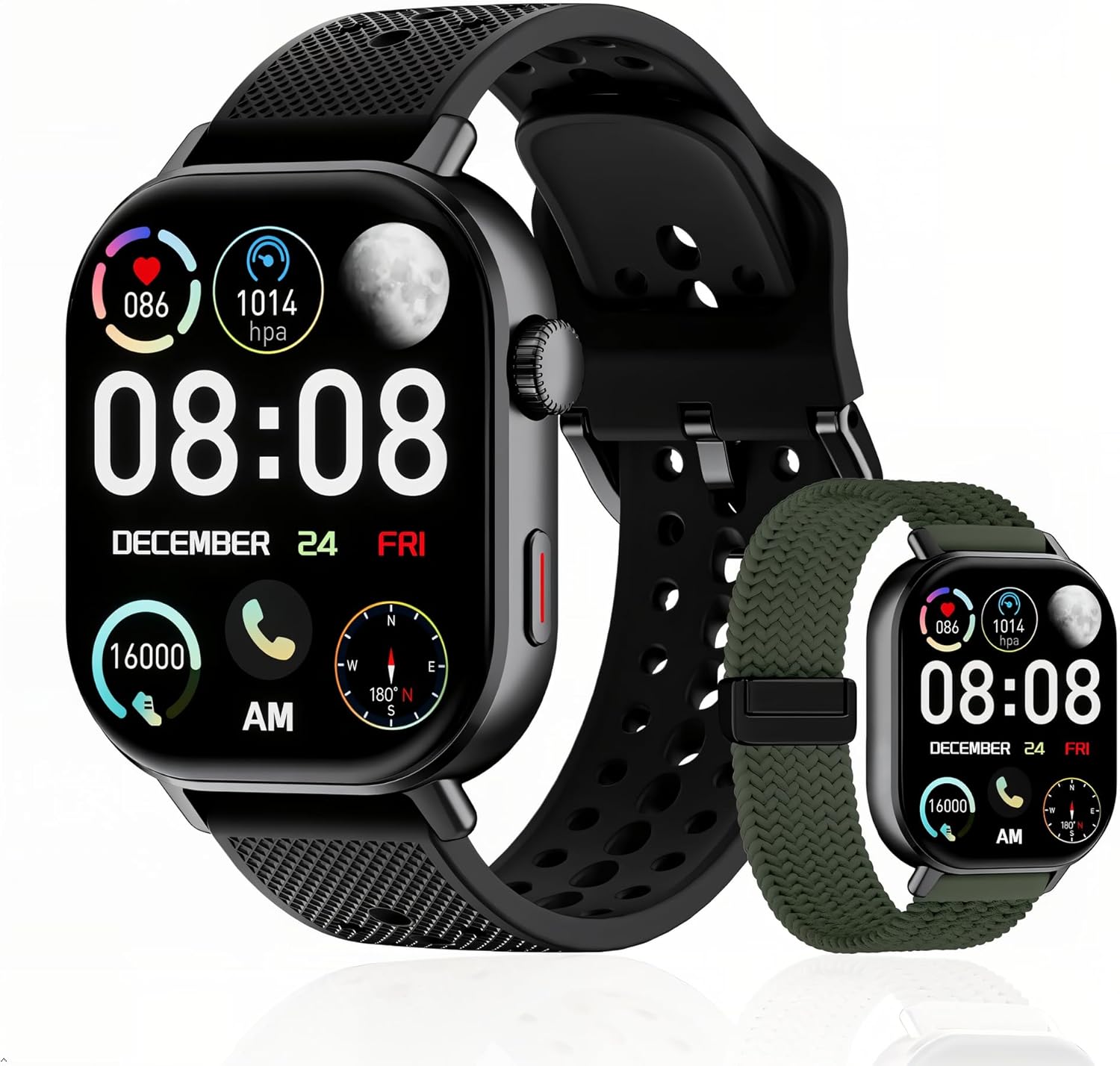
The Moutarlier GPS Running Watch has built-in multi-system GPS to track real-time pace, distance, route, and speed without a phone. It offers over 170 sports modes for activities like running, cycling, hiking, and swimming, and is 5ATM water resistant for pool swimming.
It monitors health metrics like heart rate, blood oxygen, sleep, and stress. The watch includes practical tools like music control, a stopwatch, and phone notifications with call functionality via its built-in speaker and microphone. The battery lasts up to 7 days with heavy use.
Best for: Athletes who participate in many different sports and want broad activity tracking with basic call and notification features.
Pros
- Tracks pace and distance with built-in GPS across 170+ sports modes
- 5ATM water resistance suitable for pool swimming
- Includes music control and Bluetooth call functionality
- Monitors heart rate, blood oxygen, and sleep
Cons
- The listing does not mention any structured workout or interval training features
- Square shape may not be preferred by all users
3. Best for race planning: Garmin Forerunner 55
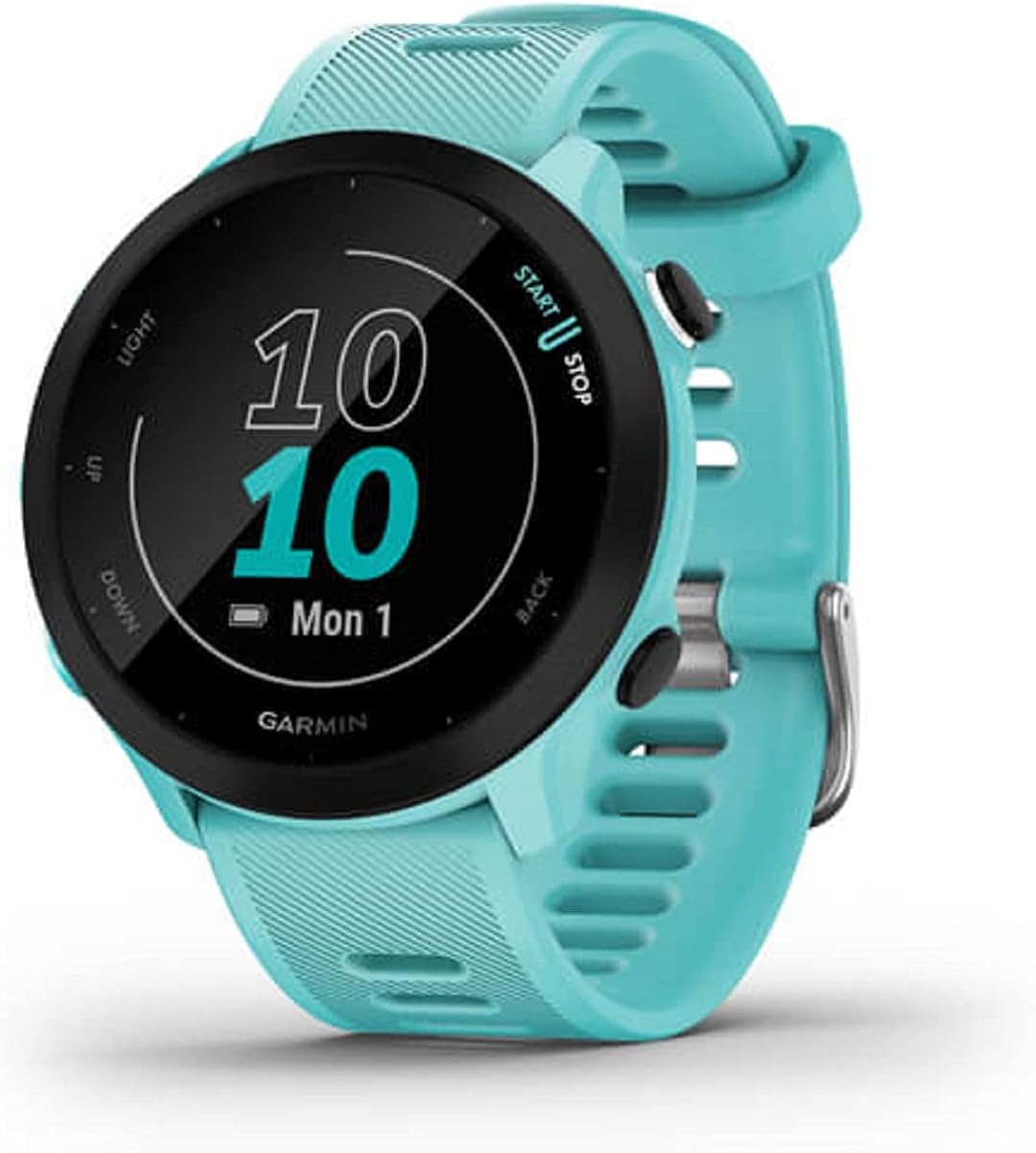
The Garmin Forerunner 55 is a GPS running watch that monitors wrist-based heart rate and tracks distance, pace, and route. It offers a battery life of up to 2 weeks in smartwatch mode and up to 20 hours in GPS mode.
For focused training, it provides daily suggested workouts and PacePro feature for GPS-based pace guidance on a selected course or distance. It includes race time predictions and finish time estimates. Activity profiles cover running, cycling, track run, pool swim, Pilates, and HIIT.
Best for: Runners training for a specific race who want pace guidance and finish time predictions for their workouts.
Pros
- Offers daily suggested workouts and PacePro for race pace strategy
- Provides race time predictions and finish time estimates
- Long battery life: up to 20 hours in GPS mode
- Tracks a variety of activities including HIIT and track runs
Cons
- PacePro feature is not compatible with on-device courses
- The listing does not specify if it has a touchscreen
4. Best for pre-set training plans: mibro GS Active2
The mibro GS Active2 is a lightweight GPS running smartwatch with a dual-band, five-satellite positioning system for fast, precise location data. It weighs 39.9g and has a 1.32-inch AMOLED touchscreen.
It comes with eight built-in running plans, such as 5K, 10K, Half Marathon, and Full Marathon training schedules. It displays running performance data including pace, cadence, stride length, and VO₂ max trends. The watch is 5ATM water resistant and supports over 150 sports modes.
Best for: Runners who want to follow a structured, goal-oriented training plan from start to finish.
Pros
- Includes eight pre-set running plans for distances from 5K to marathon
- Dual-band GPS for precise positioning and route navigation
- Lightweight design (39.9g) with an AMOLED display
- Analyzes running metrics like cadence, stride length, and VO₂ max
Cons
- GPS mode battery life is approximately 15 hours
- The listing does not mention adaptive or daily workout suggestions
5. Best for calls and notifications: HUAKUA Smart Watch
The HUAKUA Smart Watch has built-in GPS for tracking real-time pace, distance, and routes independently of a phone. It features a 1.95-inch full-touch screen and supports Bluetooth calling with a built-in speaker and microphone.
It offers over 100 sport modes and tracks health metrics like heart rate, blood oxygen, and sleep quality with cycle analysis. The watch provides phone and app notifications and includes various tools like a remote camera shutter and weather forecast.
Best for: Runners who prioritize staying connected with call and notification features during their workouts.
Pros
- Allows answering and making Bluetooth calls directly from the watch
- Large 1.95-inch touchscreen display for clear visibility
- Tracks over 100 sports modes with built-in GPS
- Monitors heart rate, blood oxygen, and sleep stages
Cons
- Water resistance is listed as 10 feet, which is less than other picks
- The listing does not mention any interval-specific or guided workout features
GPS watches for interval training at a glance
| Watch | Key Training Feature | GPS Type | Battery Life (GPS Mode) | Water Resistance |
|---|---|---|---|---|
| Garmin Forerunner 165 | Adaptive daily suggested workouts | Built-in GPS | Up to 19 hours | 50 meters |
| Moutarlier GPS Watch | 170+ sports modes | Built-in multi-system GPS | Not listed | 50 meters |
| Garmin Forerunner 55 | PacePro race guidance | Built-in GPS | Up to 20 hours | Not listed |
| mibro GS Active2 | 8 pre-set running plans | Dual-band GPS | ~15 hours | 5ATM |
| HUAKUA Smart Watch | Bluetooth calling | Built-in GPS | Not listed | 10 feet |
How to choose a GPS watch for interval training
Interval training is about structured work and rest periods, so your watch should do more than just log miles. The right features can help you execute and analyze each session effectively. For more on structuring your workouts, see our guide to running accessories.
What to look for
- Workout Guidance: Look for features like daily suggested workouts, pre-set training plans, or pace guidance. These tools can provide the structure needed for interval sessions, telling you when to push and when to recover.
- Performance Metrics: Post-workout data is crucial. Metrics like training effect, recovery time, VO₂ max, cadence, and stride length help you understand the impact of your intervals and guide future training.
- GPS Reliability & Battery: Accurate pace and distance tracking is non-negotiable. Dual-band GPS can offer better precision in challenging environments. Also, check the battery life in GPS mode to ensure it won’t die mid-long run or multi-session day.
- Design & Durability: A lightweight, comfortable watch is less distracting. Water resistance is also key for training in all weather or for tracking pool swims as cross-training.
Beyond the watch itself, safe training practices are essential. Always follow the manufacturer’s instructions for device care and charging. For guidelines on physical activity, consult resources like the Physical Activity Guidelines. You can explore more options in our full category of GPS running watches.
FAQ
What makes a GPS watch good for interval training?
A good watch for interval training provides tools to structure your workout (like guided sessions or pace alerts) and detailed metrics to analyze it afterward (like training effect and recovery time). Precise GPS for accurate pace and distance during each interval is fundamental.
Do I need a watch with special “interval” modes?
Not necessarily, but it helps. Some watches have dedicated interval timers or workout builders. Others support interval training through guided daily workouts or pre-set plans. The key is that the watch helps you manage work and rest periods effectively.
How important is battery life for interval training?
Very important if your training includes long runs or back-to-back sessions. Check the manufacturer’s listed battery life in GPS mode, as this is the most power-intensive function. A watch that dies during a long workout won’t capture your critical interval data.
Can I use a basic GPS watch for intervals?
Yes, a basic watch can track your run and lap times manually. However, watches with advanced features automate the timing, provide pace guidance, and give deeper insights into your performance, which can be more efficient and informative for structured training.
References
- Amazon product listings and manufacturer specifications (accessed October 2026)
- Physical Activity Guidelines for Americans


